Skip to content
HIPAA LINKHelp Center

How can we help?

How a client joins a visit

What your client sees at each step, so you can talk them through it on the phone.

Who can use it
All staff

Nothing in your dashboard shows you the client’s side. This is it, so you can picture what they are looking at when they call the practice confused.

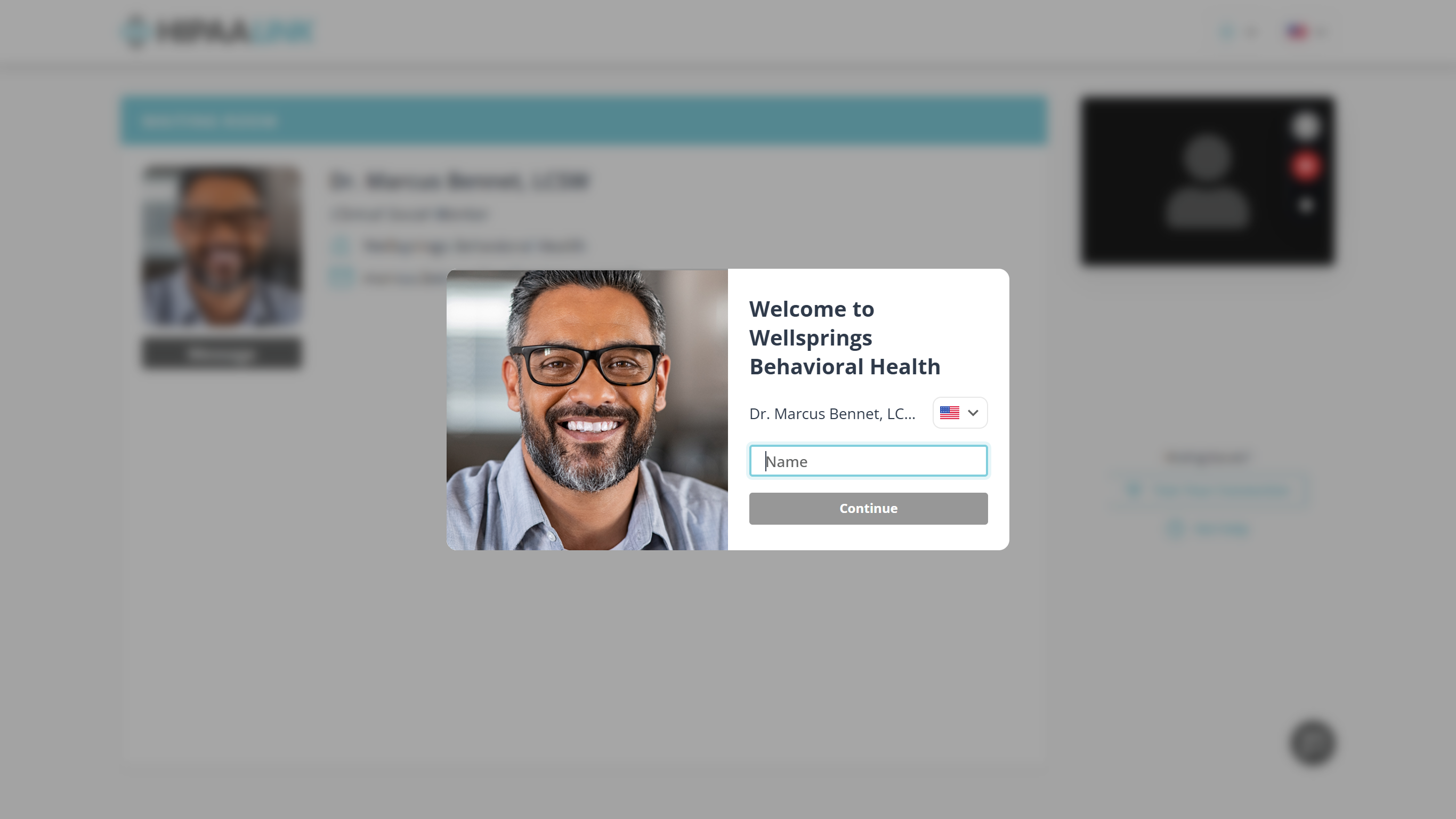
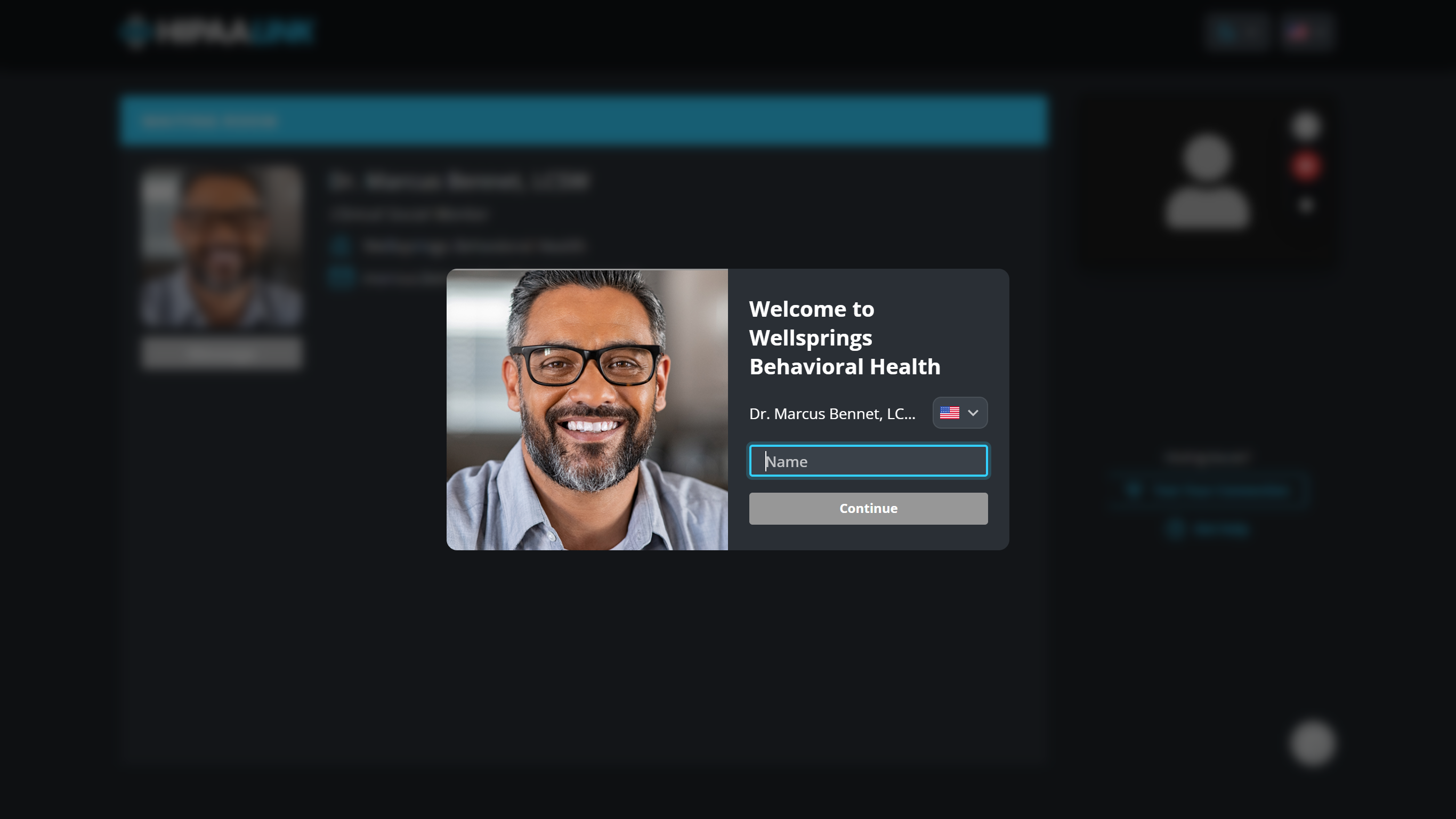
A browser window with its background dimmed behind a welcome box. The box reads Welcome to Wellsprings Behavioral Health, with the provider's name and photograph, a flag button for choosing a language, an empty Name field and a Continue button below it.
The first screen after your link opens. The flag changes the language before anything is typed.

Your organization name is at the top, your display name under it, and a box for their name. The name they type is the one you see in your queue, so ask them to use the name you booked them under.

If you have turned on Require phone number during check-in, a phone box appears too and they cannot continue without it.

A shared room link opens a full page with a live camera preview instead, and asks for a name the same way.

2. Their browser asks for the camera and microphone
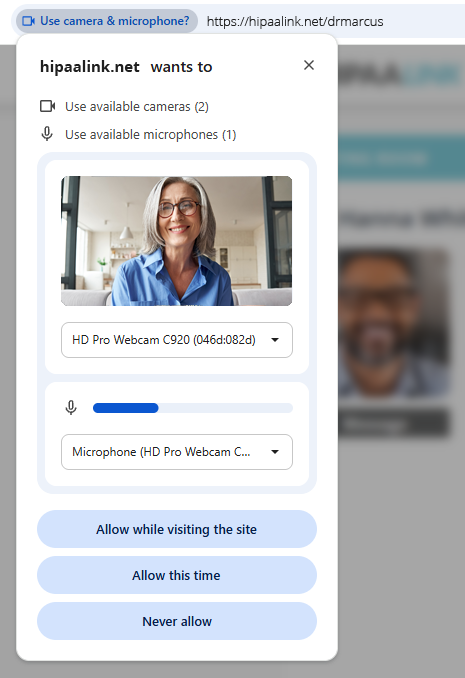
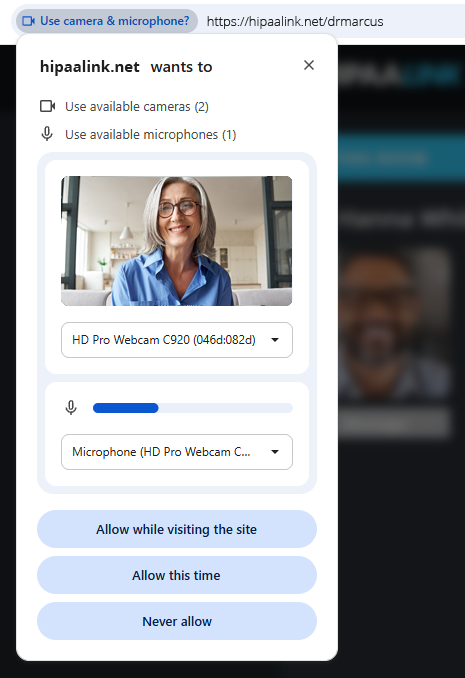
A browser permission bubble below the address bar, which reads hipaalink.net slash the provider name. The bubble is headed hipaalink.net wants to, and lists use available cameras and use available microphones. Below those a preview shows the person the camera can see, with a dropdown naming the webcam, then a microphone level meter with its own dropdown. Three buttons run along the bottom: Allow while visiting the site, Allow this time, and Never allow.
The browser asking, not the practice. The wording differs by browser, but any allow choice works and Never allow is the one to avoid.

This is where first visits go wrong. The browser asks once, and a client who declines is never asked again.

They do not need to accept to check in, but they will arrive in the call with no camera or microphone. You can see that before you call them. See Check a client’s status before you call.

3. They check their equipment
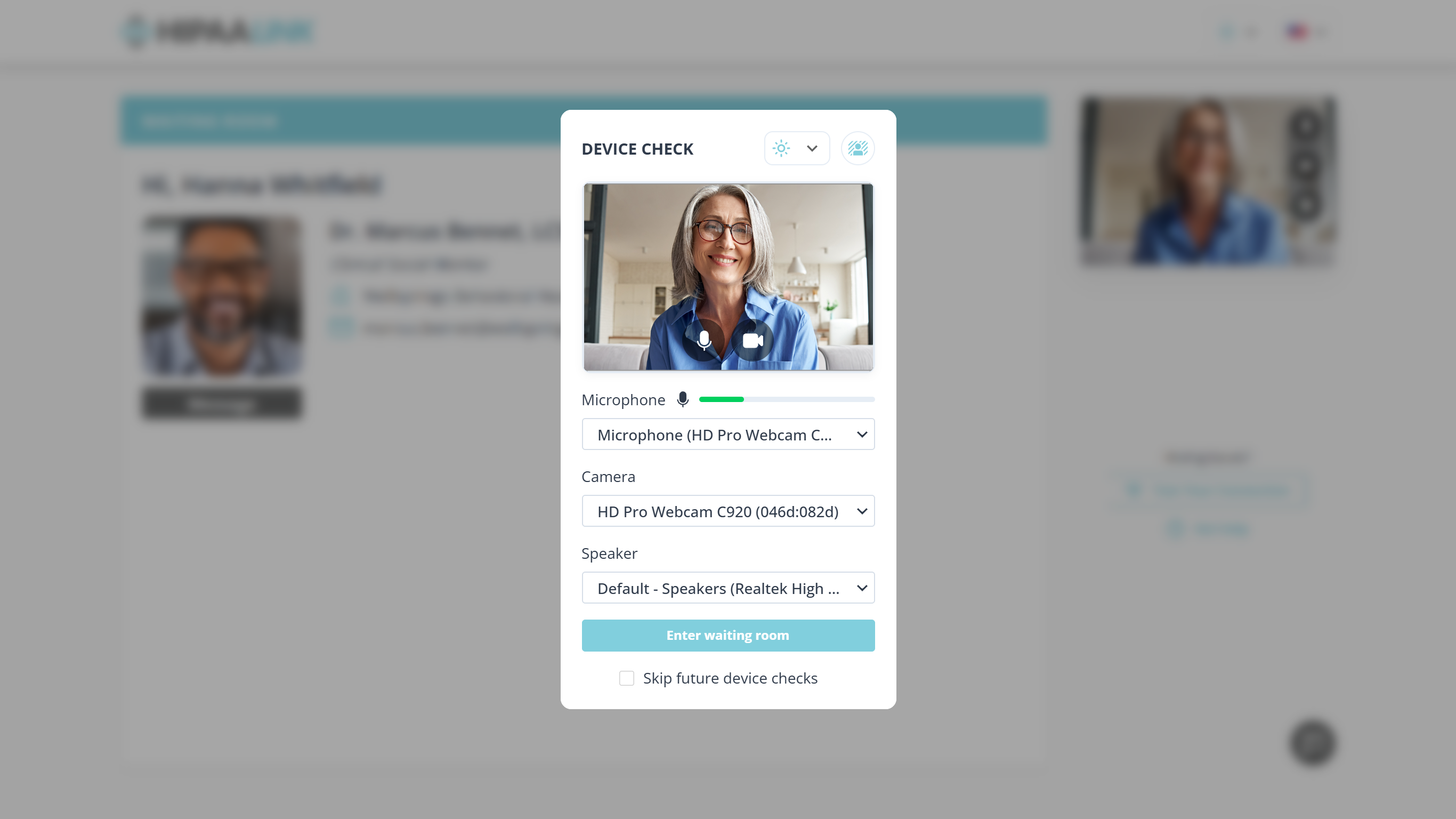
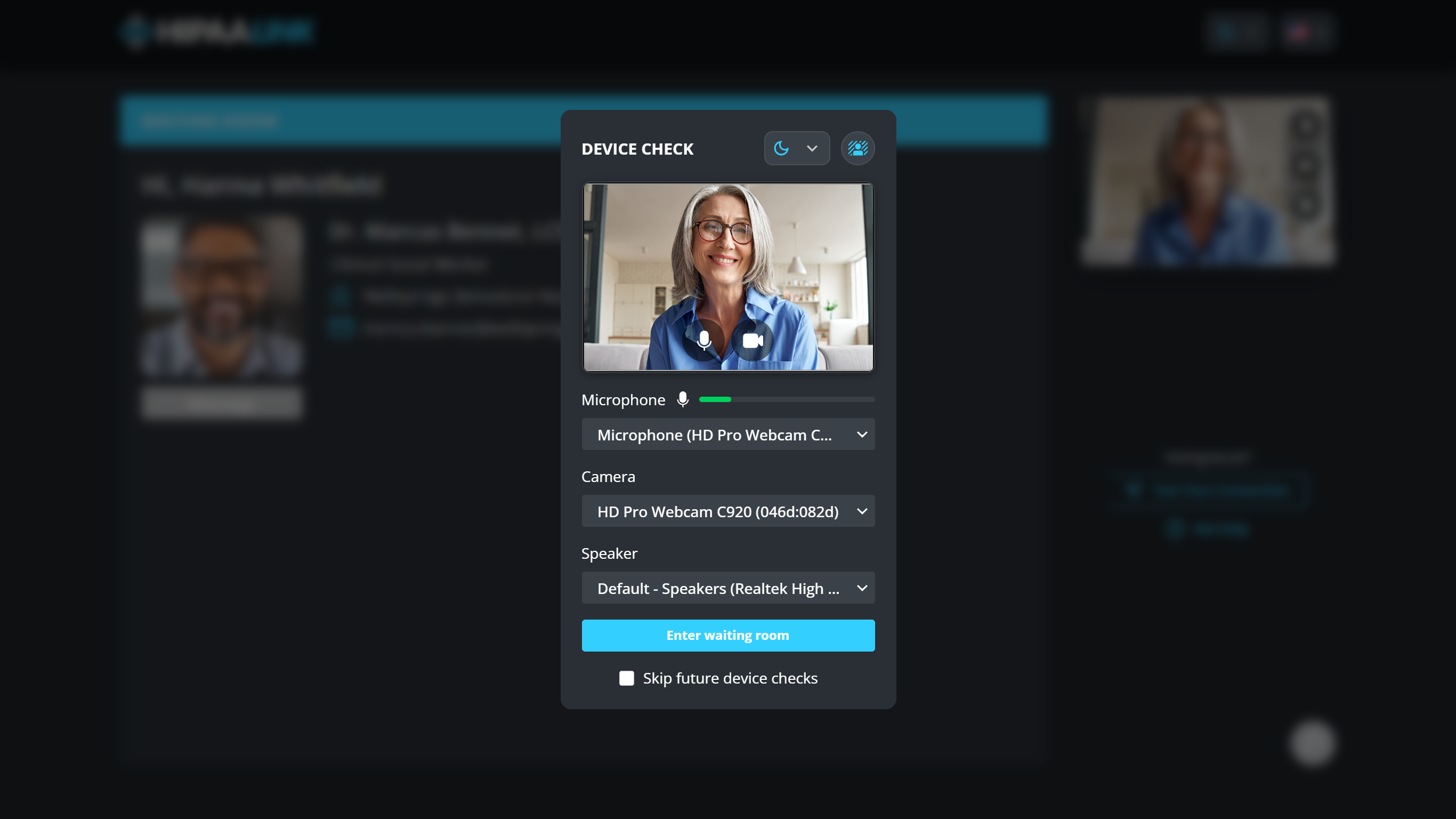
A dialog headed DEVICE CHECK over a dimmed page. At the top are a theme control and a background control. Below them a preview of the camera shows the person, with microphone and camera buttons across it. Under the preview, Microphone has a level meter lit green beside it and a dropdown naming the device, then Camera and Speaker each have their own dropdown. A full width Enter waiting room button sits at the bottom, with a Skip future device checks tick box beneath it.
The last screen before the waiting room. The green bar beside Microphone moves when the client speaks.

Each dropdown lists the equipment on their computer, so this is where a client moves from a laptop microphone to a headset. The bar beside Microphone moves when they speak, which is the quickest check to talk someone through on the phone.

They select Enter waiting room to finish. Skip future device checks jumps past this screen next time on the same device.

4. They wait
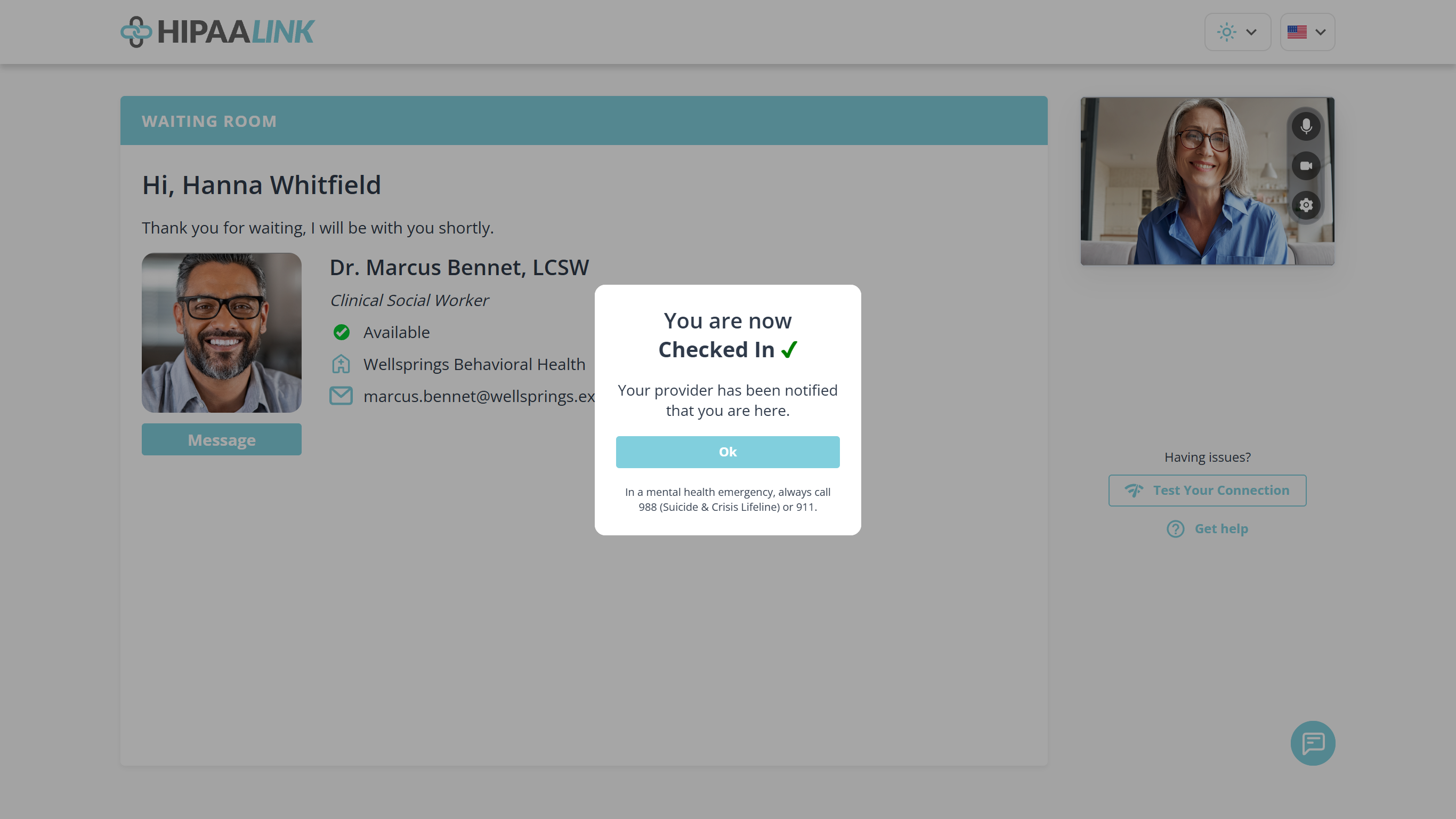
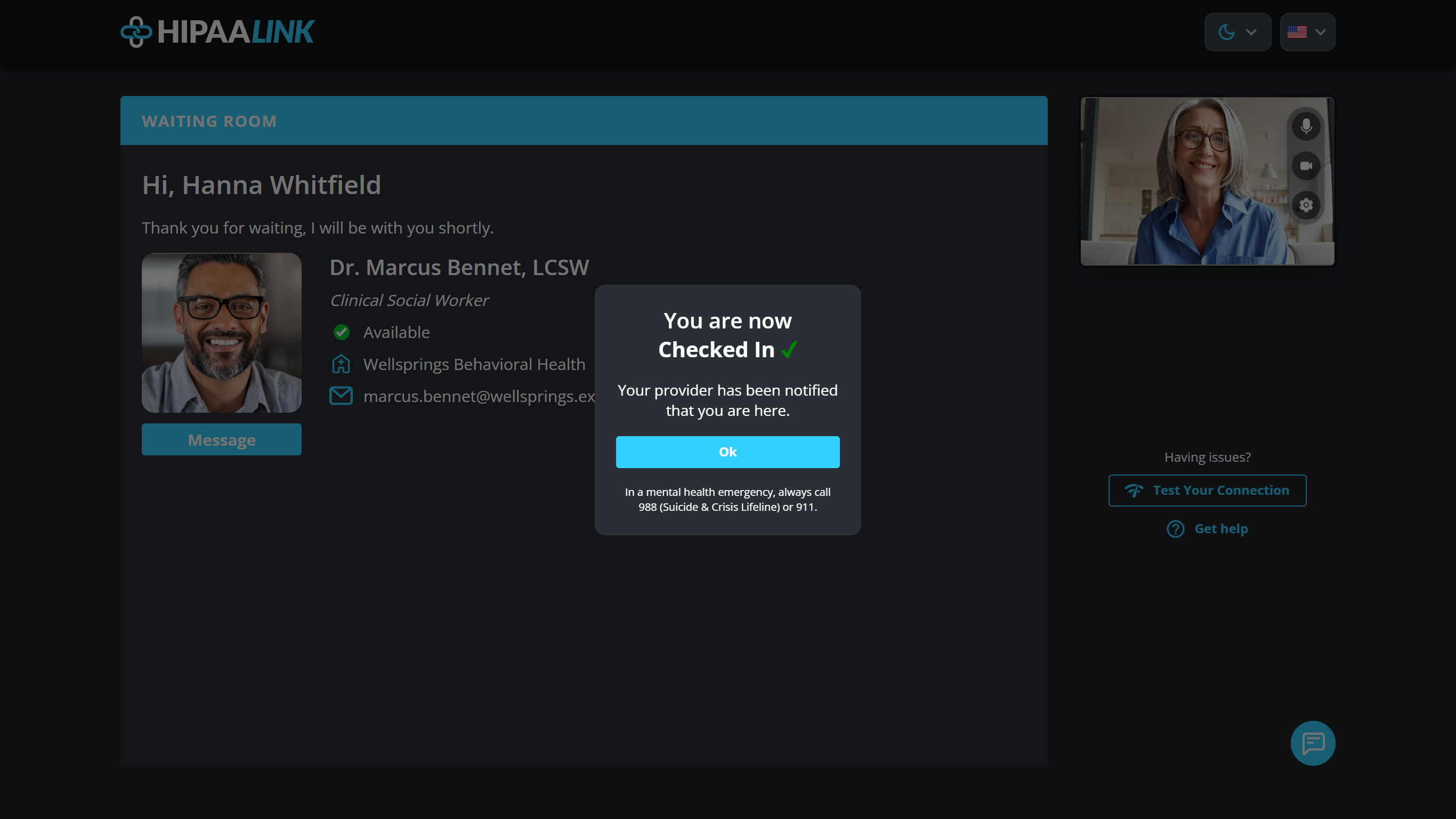
The waiting room page greeting the client by name, with a message from the provider, the provider card showing their name, credential, an Available marker, the practice and a Message button, and the client's own camera in the top right corner. A small box over the page reads You are now Checked In with a tick, Your provider has been notified that you are here, an Ok button, and a line about calling the crisis line or emergency services in a mental health emergency.
The waiting room, with the check-in confirmation over it.

They see Checked In and are told you have been notified.

The page shows Available while you are signed in and Unavailable when you are not, which is the single most common reason a client phones the practice early.

They can select Message to write to you while they wait.

5. You start the call

They are brought in. They accept nothing and press nothing, even if the confirmation box is still open on their screen.

Send them the instructions

Join your appointment is written for them rather than for you. It is the link to put in an appointment reminder.